Dabu Print - In Collaboration with Khadi London
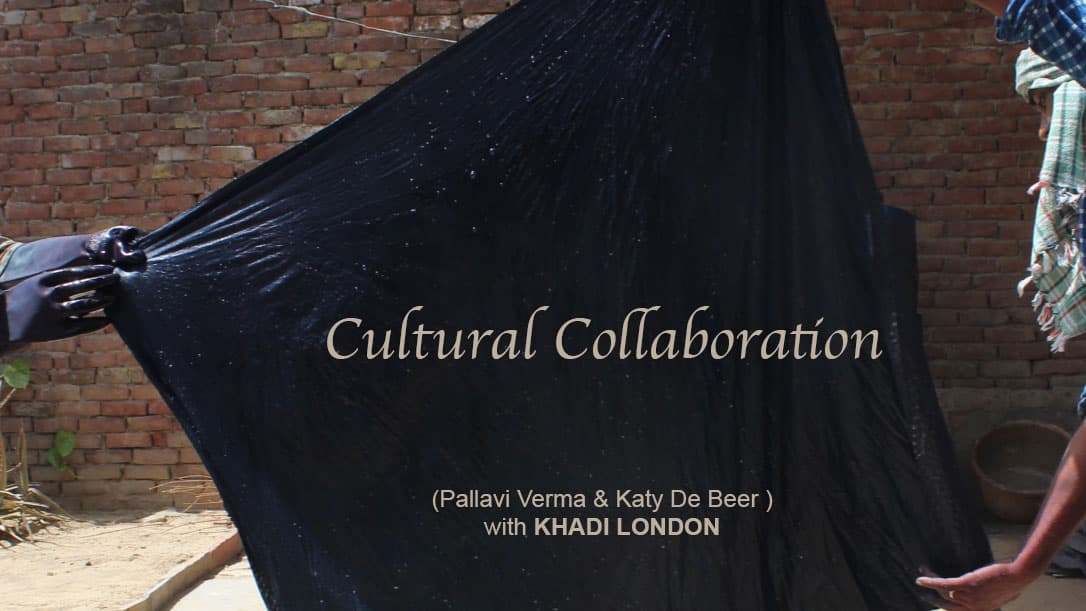

Through the ‘Culture Collaboration’ concept, this partnership celebrates a shared passion for textiles and the learning experiences that brought it to life at UAL. It aims to highlight the importance of ‘Khadi London’ by blending Hindi and English scripts—symbolising a journey woven together through fabric, culture, and creativity. This is a tribute to the multicultural spirit of London, resonating with the vibrant energy of university life, where education reaches beyond textbooks to become a joyful celebration of diverse perspectives and the shared human experience.
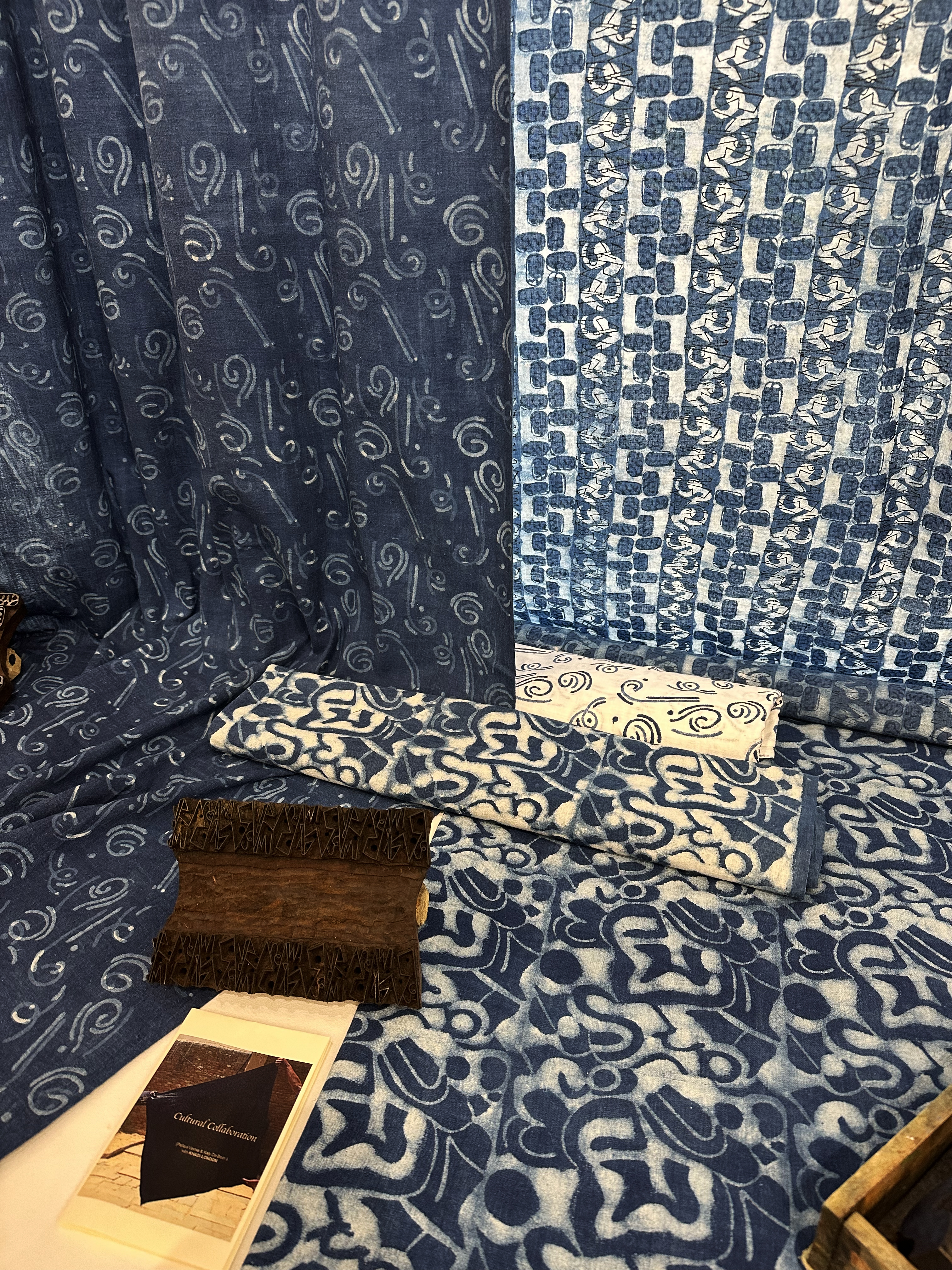
Dabu : Mud Resist Print x Indigo Dyed
The textile and fashion industries were instrumental in colonial empires, compelling Indian farmers to abandon their traditional crops for cotton and indigo. During the Industrial Revolution, sustainable indigenous cotton was replaced by harmful hybrid varieties, and chemical indigo caused a decline in natural indigo production. However, driven by increasing climate concerns and the demand for eco-friendly alternatives, local communities are now reviving the tradition of indigenous cotton and natural indigo production. Mahatma Gandhi's khadi movement promoted hand-spun Indian cotton for rural self-reliance, symbolizing independence. In Rajasthan, Dabu printing, an ancient mud resist hand-block technique, exemplifies Gandhi’s philosophy of self-reliance and sustainability. The fabric is printed with mud paste, sun-dried, then submerged in a dye vat, followed by another drying session and thorough washing to remove excess dye. Typically, indigo is used, creating contrasting colors in the parts which are uncovered with mud-resist. It is a slow process but produces artistic results.